
UV Lack is a revolutionary type of UV-curable coating that has transformed the way industries protect surfaces. Unlike traditional lacquers and varnishes, UVLack cures instantly when exposed to ultraviolet light, creating a durable, high-quality finish. Its efficiency, eco-friendly characteristics, and versatile applications make it an essential choice for manufacturers in furniture, automotive, printing, electronics, and consumer goods sectors. In this guide, we will explore everything about UV Lack, including how it works, its benefits, industrial applications, and future innovations.
What is UVLack?
UVLack is a specialized coating that combines ultraviolet light technology with lacquer properties to produce a hard, protective surface. The term UVLack originates from UV, representing ultraviolet curing, and lacquer, a type of protective finish. Unlike traditional solvent-based coatings, UVLack does not require long drying times, making it ideal for high-volume production environments. It differs from UV varnish and conventional lacquers by offering faster curing, reduced volatile organic compounds, and enhanced durability. This type of coating is often referred to as UV-curable lacquer or UV lacquer in industry discussions.
How UVLack Works
The magic of UVLack lies in its curing process, which involves photopolymerization. When the liquid coating is applied to a surface and exposed to ultraviolet light, photoinitiators in the coating trigger a chemical reaction that rapidly forms a solid polymer network. This reaction ensures that the coating hardens instantly, providing a scratch-resistant and durable finish.
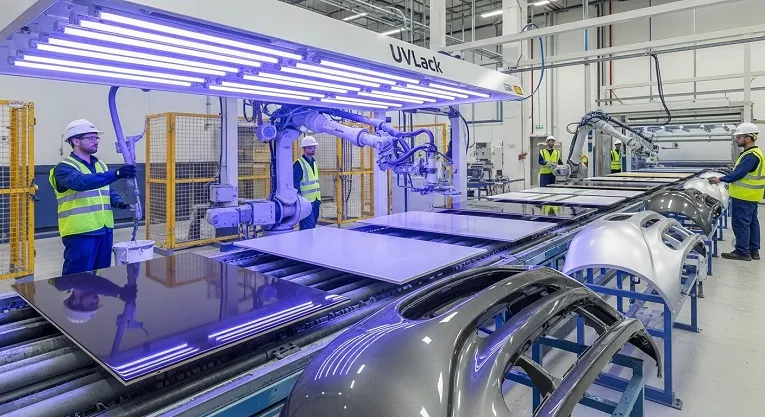
UVLack can be cured using different types of ultraviolet lamps. Traditional mercury lamps have been widely used, while modern LED UV lamps offer better energy efficiency and more consistent curing results. The speed and quality of UVLack curing depend on factors such as lamp intensity, coating thickness, and substrate compatibility. By understanding the UV curing process, manufacturers can optimize the application for a perfect finish every time.
Key Benefits of UV Lack
UVLack provides numerous advantages over conventional coatings. One of the primary benefits is durability. It creates a hard, scratch-resistant surface that maintains its aesthetic appeal over time. Whether applied to furniture, automotive interiors, or packaging, UVLack ensures that surfaces remain protected against daily wear and tear.
Another major advantage is production efficiency. Because UVLack cures instantly under ultraviolet light, manufacturers can reduce waiting times associated with traditional drying methods. This fast-curing property makes UVLack ideal for high-volume production environments where time is critical.
UVLack also offers environmental benefits. Unlike solvent-based coatings that release volatile organic compounds (VOC), UVLack is low-VOC, reducing harmful emissions and energy consumption. This makes it a sustainable option for businesses looking to minimize their environmental footprint.
Additionally, UVLack provides aesthetic versatility. It can produce finishes ranging from high-gloss to matte or satin, allowing designers to achieve the desired visual effect without compromising durability. Industries such as furniture, automotive, and electronics benefit from this combination of functionality and beauty.
Industrial and Consumer Applications
The versatility of UVLack extends across multiple industries. In furniture manufacturing, it is used to protect wooden surfaces while enhancing the natural texture and gloss of the material. For automotive interiors, UVLack coatings provide durability against scratches, spills, and fading, ensuring the vehicle retains a high-quality appearance for years.
In the printing and packaging industry, UVLack coatings protect printed materials from abrasion, moisture, and UV damage, making them suitable for both consumer products and industrial packaging. The electronics industry also benefits from UV Lack, as it provides protective coatings for devices and components that need scratch resistance and long-lasting performance.
Emerging industries are also exploring UVLack applications. Aerospace and medical device manufacturers are investigating UVLack for specialized protective coatings, highlighting the growing versatility of this technology.
Implementation and Best Practices
Applying UVLack effectively requires careful attention to surface preparation and application techniques. Common methods include spray coating, rolling, dipping, and inkjet printing. Ensuring the substrate is clean, dry, and compatible with UVLack is critical for achieving optimal adhesion and curing performance.
Manufacturers should also consider safety measures, including proper personal protective equipment (PPE) and precautions against UV exposure. Troubleshooting common issues, such as uneven coatings or under-cured spots, can further improve production efficiency and coating quality.
Comparison with Other Coatings
When compared to solvent-based and powder coatings, UVLack offers superior curing speed, environmental benefits, and durability. Solvent-based coatings require longer drying times and release VOCs, while powder coatings need specialized curing equipment and may not provide the same level of surface smoothness. UVLack provides a balanced solution for manufacturers looking for a fast, durable, and eco-friendly coating option.
In terms of cost, UVLack may have higher initial equipment expenses, but its long-term benefits, such as faster production and reduced energy consumption, often justify the investment.
Maintenance and Lifecycle
Proper maintenance ensures that UVLack coatings perform at their best throughout their lifespan. Regular cleaning using non-abrasive materials helps preserve the finish. If recoating is necessary, following the manufacturer’s guidelines for surface preparation and curing ensures a seamless application. Optimizing UVLack performance over time can extend the coating’s durability and maintain its aesthetic appeal.
Future Trends and Innovations
The future of UVLack is closely tied to advancements in technology and sustainability. LED UV curing continues to improve energy efficiency and curing consistency. Innovations in bio-based resins offer more eco-friendly alternatives for manufacturers, while smart coating technologies integrate sensors to monitor curing quality in real time.
Industries adopting these innovations will benefit from reduced waste, faster production cycles, and enhanced coating performance. UVLack is poised to remain a critical solution in modern manufacturing, combining efficiency, durability, and sustainability.
FAQ
How long does UVLack last?
UVLack coatings can last several years with proper maintenance, depending on the substrate and environmental conditions.
Is UVLack eco-friendly?
Yes, UVLack is low-VOC and consumes less energy compared to traditional coatings, making it a sustainable option.
Can UVLack be applied to multiple surfaces?
UVLack is compatible with a variety of substrates, including wood, metal, and plastic, but surface preparation is critical for optimal adhesion and curing.