
LEGO Technic sits at the intersection of construction toy and genuine engineering education, and its robotics line specifically has become one of the most respected entry points into programming and mechanics for kids, students, and hobbyist adults alike. This guide covers what LEGO Technic and its robotics kits actually offer in 2026, which sets are worth buying, and who they genuinely suit.
What Makes LEGO Technic Different From Standard LEGO
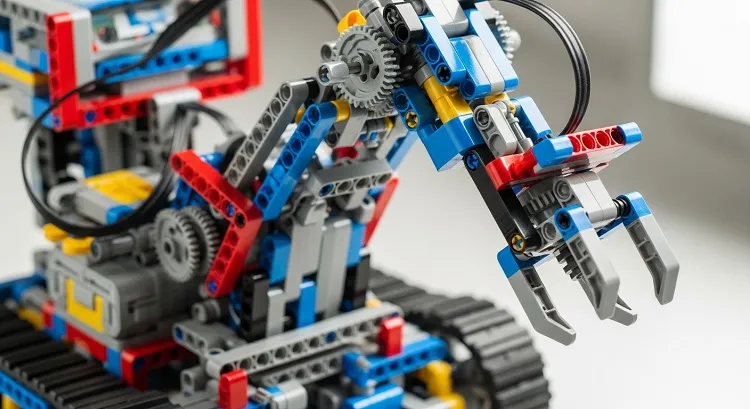
Standard LEGO sets focus on stacking and structural building. LEGO Technic adds functional mechanical engineering to that foundation: gears, axles, pneumatic components, and increasingly, programmable motors and sensors. This turns a build from a static model into a working mechanism, whether that’s a car with real steering geometry or a robot that can walk, grip, and respond to its environment.
The Robotics Line: From Mindstorms to Robot Inventor
LEGO’s dedicated robotics story began with the original Mindstorms line in 1998, which introduced the idea of programmable LEGO robots to a mainstream audience for the first time. The current flagship, the LEGO Mindstorms Robot Inventor (set 51515), builds directly on that legacy with a more capable Hub, smaller and lighter motors, and support for both simple block-based coding and full Python programming, giving it genuine room to grow with a child’s skill level rather than being outgrown within a few months.
The Robot Inventor kit builds into five distinct robots from a single roughly 1,000-piece set, each with its own behaviour and personality, alongside a companion app offering more than 50 guided activities. For families or classrooms wanting a single kit with long-term depth, it remains the standout choice in LEGO’s current robotics lineup.
LEGO Boost: The Easier Starting Point
For younger children or complete beginners, LEGO Boost offers a gentler introduction, using a simplified drag-and-drop coding interface rather than the more advanced programming options in Robot Inventor. It typically builds into a small number of robot models with basic sensor and motor functions, making it a genuinely appropriate “gateway” set before stepping up to more advanced robotics kits.
Choosing the Right Set for a Child’s Age and Skill Level
| Set | Best For | Coding Style |
|---|---|---|
| LEGO Boost | Younger children, complete beginners | Simple drag-and-drop |
| LEGO Mindstorms Robot Inventor | Middle and high schoolers, hobbyist adults | Block-based and Python coding |
| LEGO Technic (non-robotic sets) | Anyone interested in pure mechanical engineering without programming | None, purely mechanical |
Most robotics-focused LEGO Technic sets are recommended from around age 8 to 9 and up, though the actual difficulty range varies enormously between the simplest beginner builds and the more advanced multi-robot kits, so matching the set to a specific child’s patience and existing skill level matters more than following a single blanket age recommendation.
What Kids Actually Learn
- Mechanical principles: Gear ratios, torque, and structural stability through direct, hands-on trial and error rather than abstract explanation
- Programming logic: Sequencing, conditionals, and troubleshooting, first through visual block-based coding and later, on more advanced sets, through real Python
- Persistence and problem-solving: Robots that don’t work as expected on the first attempt teach iterative debugging in a low-stakes, tangible way
- Spatial reasoning: Planning a 3D structure from 2D instructions builds skills that transfer directly to broader STEM subjects
Compatibility With Older LEGO Robotics Sets
Current-generation hubs, motors, and sensors are generally compatible with standard LEGO Technic beams, pins, gears, and axles, and in many cases with components from recent past robotics sets like LEGO Boost. This matters for families building a collection over several years: components from an earlier, simpler set often carry forward into more advanced future builds rather than becoming obsolete.
Is LEGO Technic Robotics Worth It Compared to Other STEM Toys?
The core advantage LEGO robotics holds over many competing STEM toys is longevity and depth: a single well-chosen set can occupy a child from an early beginner stage through several years of increasingly advanced builds and programming challenges, rather than being solved and set aside after a single use. The trade-off is price, LEGO robotics kits generally cost more upfront than simpler single-purpose STEM toys, so the value case depends on genuine, sustained interest rather than a one-off gift.
Frequently Asked Questions
What age is LEGO Technic robotics appropriate for?
Most robotics-focused sets are recommended from around age 8 to 9 and up, though difficulty varies significantly between individual sets, so matching the specific kit to the child’s skill level matters more than age alone.
Does LEGO Mindstorms Robot Inventor support real coding languages?
Yes, it supports both simplified block-based coding for beginners and full Python programming for more advanced users, giving it room to grow with a child’s ability over time.
Is LEGO Boost or Robot Inventor better for a first robotics set?
LEGO Boost suits younger children or complete beginners with its simpler drag-and-drop interface, while Robot Inventor suits middle schoolers and up who are ready for more advanced building and coding.
Are older LEGO robotics components compatible with newer sets?
Generally yes, most hubs, motors, and sensors work with standard Technic building elements and often with components from recent past robotics sets, protecting the value of a growing collection.
Conclusion
LEGO Technic’s robotics line has matured into a genuinely credible STEM learning tool, with the Mindstorms Robot Inventor offering real depth through Python programming for older kids and hobbyists, and LEGO Boost providing an accessible starting point for younger beginners. The higher upfront cost compared to simpler toys is best justified by sustained, genuine interest, since the platform is specifically built to grow with a child’s skills over several years rather than being a single-use purchase.