
A smartphone bought today should last four to seven years in everyday use. Google Pixel 8 and later phones and Samsung Galaxy S24 and later phones get seven years of software and security updates, and iPhones typically get six to eight years of major iOS updates, while the battery usually ages first.
Most phones are retired long before they stop working. This guide explains both limits, brand by brand, so you can tell whether yours has years left.
What “Lasts” Actually Means
A phone has three separate clocks. Software support matters most, because once a phone stops getting security updates it becomes unsafe for banking, email and anything holding personal data. The battery is the third clock: every battery loses capacity with use, but a worn battery is fixable and is the cheapest way to add life to an older phone.
How Long Each Brand Supports Its Phones
| Phone | Major OS updates | Security updates | Support ends (approx) |
|---|---|---|---|
| Apple iPhone (recent models) | Around 6 to 8 years, no fixed promise | 1 to 2 years after major updates stop | iPhone 11 (2019) runs iOS 26 and 27 |
| Samsung Galaxy S24 and later | 7 generations | 7 years | S24 to Jan 2031 |
| Samsung Galaxy S21 to S23 | 4 generations | 5 years | Varies by model |
| Samsung Galaxy A57 and A37 5G | Up to 6 generations | Up to 6 years | Announced March 2026 |
| Google Pixel 8 and later | 7 years | 7 years | Pixel 8 to Oct 2030 |
| Google Pixel 6, Pixel 7, Pixel Fold | 5 years | 5 years | Pixel 7 to Oct 2027 |
| Budget and mid-range Android | Typically 2 to 4 years | Varies by brand | Check the maker’s page |
Apple iPhone
Apple publishes no fixed promise, so the honest answer comes from its track record: most iPhones get around six to eight years of major iOS updates, plus a year or two of security patches after that. The iPhone 11, released in 2019, still runs iOS 26 and iOS 27. Under UK rules, Apple has committed to at least five years of security updates for the iPhone 15 Pro Max.
Samsung Galaxy
Samsung now offers seven years of support on its flagships, matching Google’s promise. Galaxy S24 and later phones, including the S25 and S26 families and the Z Fold 6 and Z Flip 6, get seven generations of Android and One UI upgrades and seven years of security updates from first global launch. The Galaxy S24, launched in January 2024, is covered to January 2031. Older flagships get less: Galaxy S21 to S23 phones get four generations and five years, while the Galaxy A57 5G and A37 5G get up to six of each.
Google Pixel
Google’s policy is the clearest. Pixel 8 and later phones get seven years of OS and security updates from first availability on the Google Store in the US, putting the Pixel 8, launched in 2023, on support to about October 2030. Pixel 6 and Pixel 7 phones, including the original Pixel Fold, get five years, so the Pixel 7 runs to about October 2027. Pixel 5a and older models get no updates at all.
The Battery Ages First
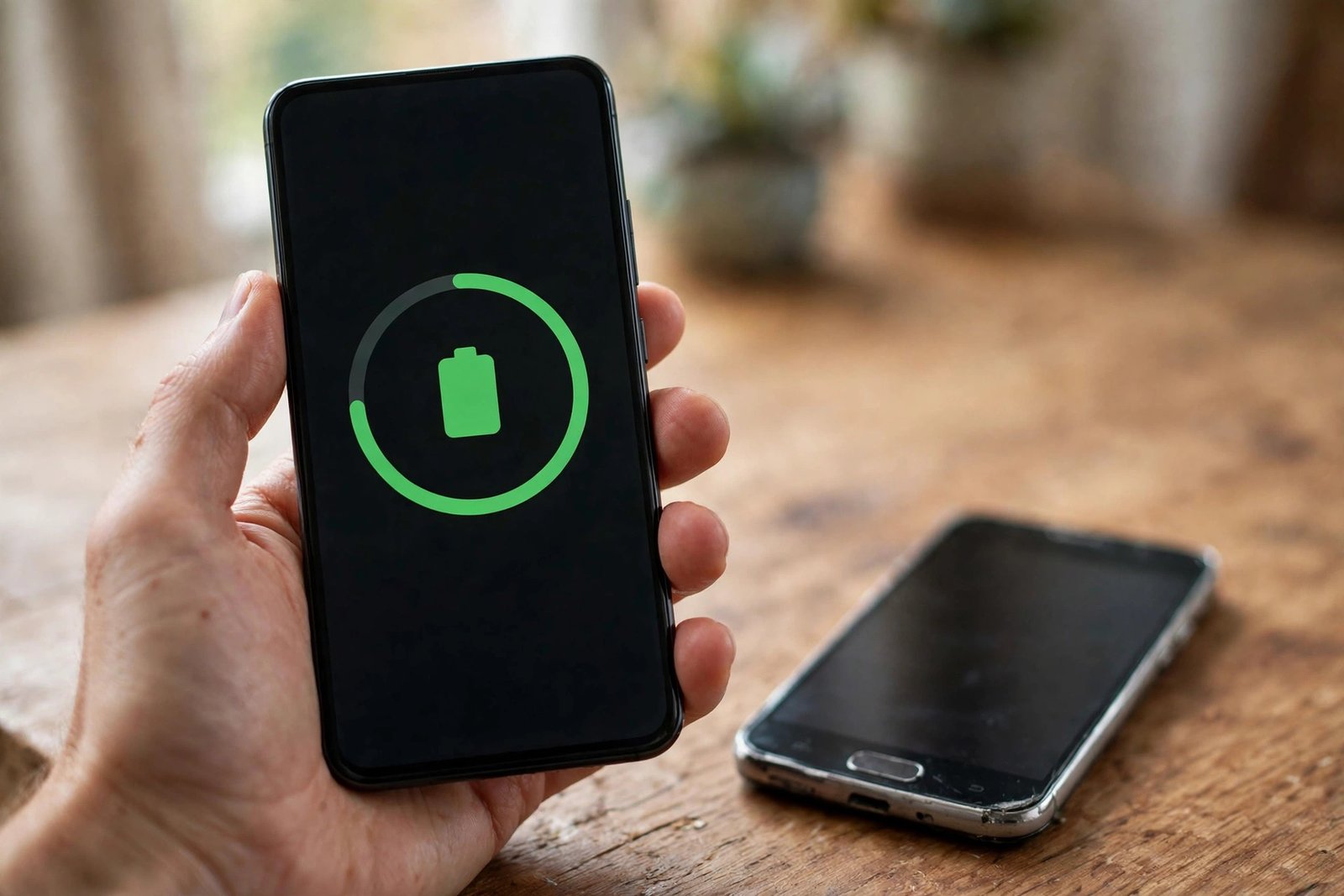
A battery wears out through charge cycles. One complete cycle means using an amount equal to 100 percent of the battery’s capacity, not one plug-in. Apple designs iPhone 15 and later batteries to retain 80 percent of their original capacity at 1,000 complete charge cycles under ideal conditions, and iPhone 14 and earlier batteries to retain 80 percent at 500 cycles. Those are design targets, not guarantees.
The EU has turned battery life into law. Under Regulation (EU) 2023/1670, phones placed on the EU market from 20 June 2025 must have a battery that retains at least 80 percent of its original capacity after 800 full charge cycles, plus spare parts for at least seven years and an A to E repairability score. These rules apply to phones sold in the EU rather than the UK, but most UK phones are the same models, so UK buyers get much of the benefit.
| Rule or design point | What it means | Applies to |
|---|---|---|
| Apple iPhone 15 and later battery | Designed to keep 80% capacity at 1,000 complete charge cycles | iPhone 15 and later |
| Apple iPhone 14 and earlier battery | Designed to keep 80% capacity at 500 complete charge cycles | iPhone 14 and earlier |
| EU ecodesign rule, Regulation (EU) 2023/1670 | Battery must keep at least 80% after 800 cycles; spare parts for at least 7 years; OS updates for at least 5 years from last unit sold | Phones placed on the EU market from 20 June 2025 |
| Apple battery health screen | Maximum Capacity, plus cycle count on iPhone 15 and later | Settings, Battery, Battery Health |
You can check the number yourself. On an iPhone, open Settings, then Battery, then Battery Health, where Maximum Capacity shows the current capacity compared with when the battery was new. On iPhone 15 and later the same screen also shows the cycle count, the more useful figure because Apple’s design rating is written against it. What decides a replacement is how the phone behaves, not the number on the screen.
Signs It Is Time to Replace Your Phone
Security updates have stopped. If the security patch date in Settings is many months old and nothing new arrives, support has ended and the phone should not be used for banking or email.
The battery dies early. If the phone shuts down at 20 or 30 percent or needs charging twice a day, the battery is worn. A swollen battery is a safety issue: stop using the phone and get it replaced.
Apps you need no longer work. When the apps you rely on need a newer operating system than your phone can run, the phone has reached the end of its useful life. Banking and payment apps are usually the first to refuse old software.
Repairs cost more than the phone is worth. A cracked screen or a dead charging port on a phone already out of support is rarely worth fixing. Put the money towards a replacement instead.
Repair or Replace?
If the phone still gets security updates and only the battery is worn, replace the battery: it is usually much cheaper and can add two or more years of useful life. Replace the phone when support has ended and the battery is worn, or when a repair costs more than the phone is worth. If you are weighing an iPhone upgrade, our iPhone 14 vs iPhone 16 Pro Max upgrade guide and our iPhone 15 vs iPhone 16 Pro Max upgrade guide compare the models side by side.
How to Make Your Phone Last Longer
Heat does the most damage to a battery, so keep the phone out of hot cars and avoid gaming while it charges. Charge between 20 and 80 percent where practical, and use the charging limit on iPhone 15 and later, which can be set from 80 to 100 percent in steps of 5. Use a case and a screen protector, and when the battery does wear out, replace it once rather than replacing the whole phone.
Frequently Asked Questions
How long does the average smartphone last?
Four to seven years in everyday use if you look after it. Software support is the hard limit: a Pixel 8 or later phone or a Galaxy S24 or later phone gets seven years, and an iPhone gets around six to eight years of major updates.
How long do iPhones last?
Typically six to eight years of major iOS updates, followed by a further period of security patches. The iPhone 11 from 2019 still runs iOS 26 and iOS 27. Apple publishes no fixed promise, so these figures come from its track record.
How long do Samsung phones last?
Galaxy S24 and later phones get seven generations of Android upgrades and seven years of security updates. Galaxy S21 to S23 phones get four generations and five years. Newer A series phones get up to six of each, and budget Galaxy phones get less.
How long do Google Pixel phones last?
Pixel 8 and later phones get seven years of OS and security updates, so a Pixel 8 is covered to about October 2030. Pixel 6 and Pixel 7 phones get five years, and Pixel 5a and older models get no updates at all.
Is 80% battery health bad?
No. Eighty percent is the capacity Apple designs its batteries to retain at a stated cycle count: 500 cycles on iPhone 14 and earlier, 1,000 cycles on iPhone 15 and later. Replace the battery when the phone dies early or shuts down unexpectedly, not because of the number alone.
Conclusion
A smartphone bought today should last four to seven years, and the brand you pick decides where in that range you land. Pixel 8 and later phones and Galaxy S24 and later phones carry a seven-year promise, iPhones have a six to eight year track record, and budget Android phones typically manage two to four years. Check the support left on the exact model before you buy, and replace the battery once rather than the phone.